
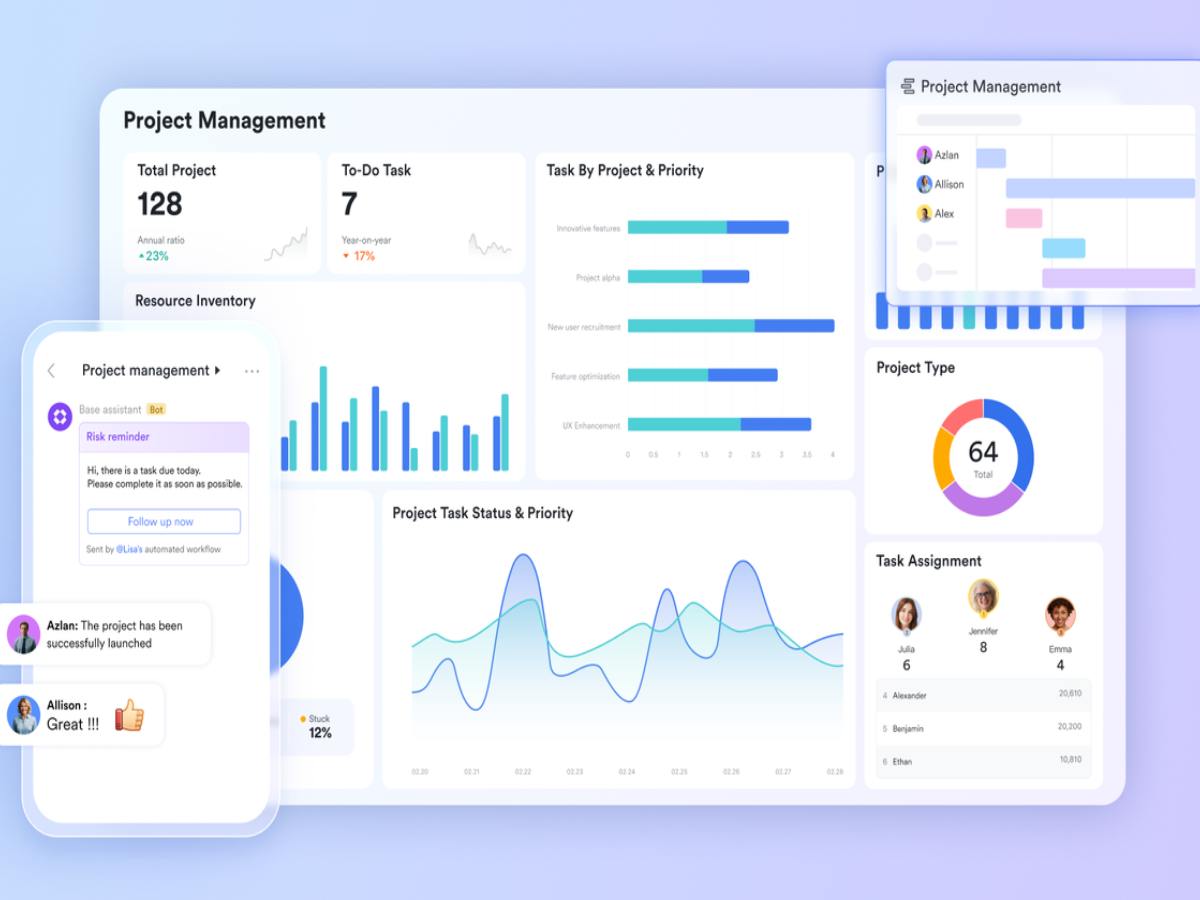
The first office is a culture. The second office is a test of whether that culture was structural or accidental. Companies that open a second location with genuine optimism about culture continuity often discover within six months that the new office has developed its own culture by default rather than by design, and that the two cultures share a brand without sharing the values, the communication norms, or the operational spirit that made the original office worth replicating. The problem is not that the people in the second office are different. It is that the cultural transmission mechanisms that worked in the first office, shared physical space, ambient leadership, informal hallway conversations, and the social fabric of daily proximity, do not travel to a location that does not share the same building. Culture in the second office is built from scratch by whoever arrives first and settles the norms before anyone has thought carefully about what those norms should be. The organizations that have opened second offices without losing cultural coherence have done it by investing in the infrastructure that carries culture across locations, built on project management tools designed to make distributed cultural transmission a structural feature rather than a deliberate ongoing effort.
Table of Contents
Communication norms that are visible across locations with Lark Messenger
Culture is transmitted through communication norms as much as through stated values. The way decisions are communicated, the way feedback is delivered, the way leadership engages with the team in daily conversation: these are all cultural signals that the second office cannot receive if the first office’s communication environment is not visible to them in real time.
-
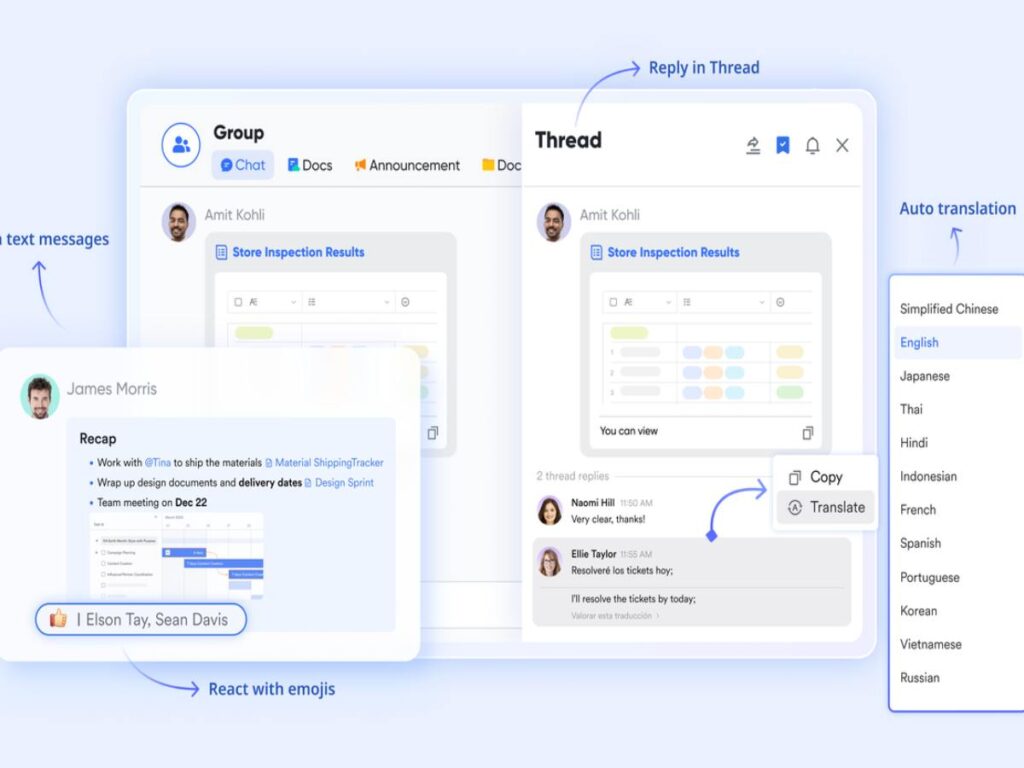
“Real-time Auto Translation” across 24 languages for inclusive cross-location communication. When the first and second offices communicate in a shared Lark Messenger environment with automatic translation for different language backgrounds, the communication norms that define the culture are visible and participable across both locations simultaneously.
-
Group folder organization for cross-location communication structure. Shared communication groups organized into folders that span both locations give every team member, regardless of which office they sit in, access to the same communication context and the same informal leadership visibility that shapes culture at the first office.
A knowledge base that carries culture through documentation with Lark Wiki
Culture at the first office is partly explicit, in the stated values and the published norms, and partly implicit, in the undocumented practices and unwritten rules that everyone who has been there long enough has absorbed without being told. When the second office opens, the explicit culture travels in the materials prepared for the opening. The implicit culture stays in the first office.
-
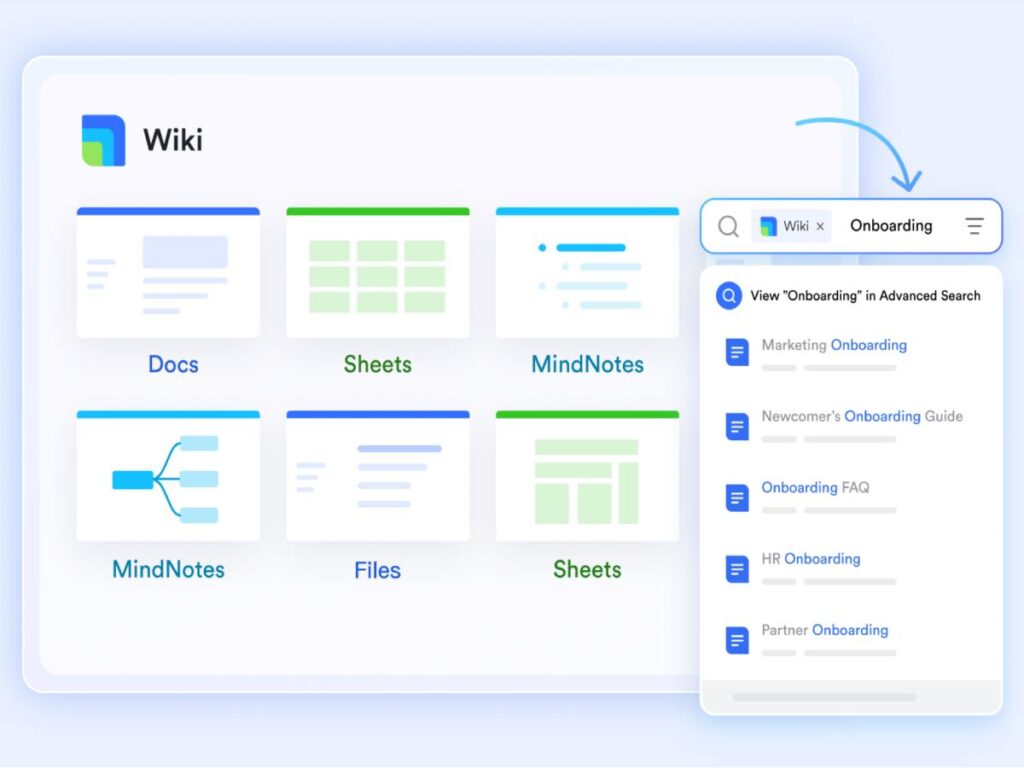
“Rich Content” for comprehensive cultural documentation. Lark Wiki pages can carry documents, embedded decision records, and process databases within a single organized space. The practices that define the first office’s culture, the way decisions are made, the way conflicts are resolved, the way new ideas are received, can be documented in enough detail to give the second office a genuine starting point rather than a list of values with no operational content.
-
“Migration” from the formats where cultural documentation already exists. Cultural artifacts that live in Word documents, Confluence pages, or shared drives can be migrated into the Wiki without manual recreation, so the cultural record that exists in the first office’s legacy documentation becomes part of the second office’s onboarding resource from the moment it opens.
Cross-location collaboration that prevents cultural divergence with Lark Meetings
The second office that works entirely with its own people develops its own working culture as a byproduct of its own working patterns. The cross-location collaboration that might have prevented that divergence requires deliberate investment in meeting formats that give both locations genuinely equivalent participation rather than replicating the in-office dynamic in a digital format.
-
“Group Meetings” with breakout sessions for cross-location team building. Cross-location team events can divide into mixed-office breakout groups where team members from both locations work together in small groups, creating the relationship fabric across locations that would have developed naturally through shared physical space.
-
“Magic Share” for live collaborative work that crosses location boundaries. When team members from both offices work on the same live document simultaneously during a meeting, the collaboration is genuinely cross-location rather than one office presenting to another, creating shared ownership of work that builds cultural connection.
Shared documentation that keeps both offices working from the same playbook with Lark Docs
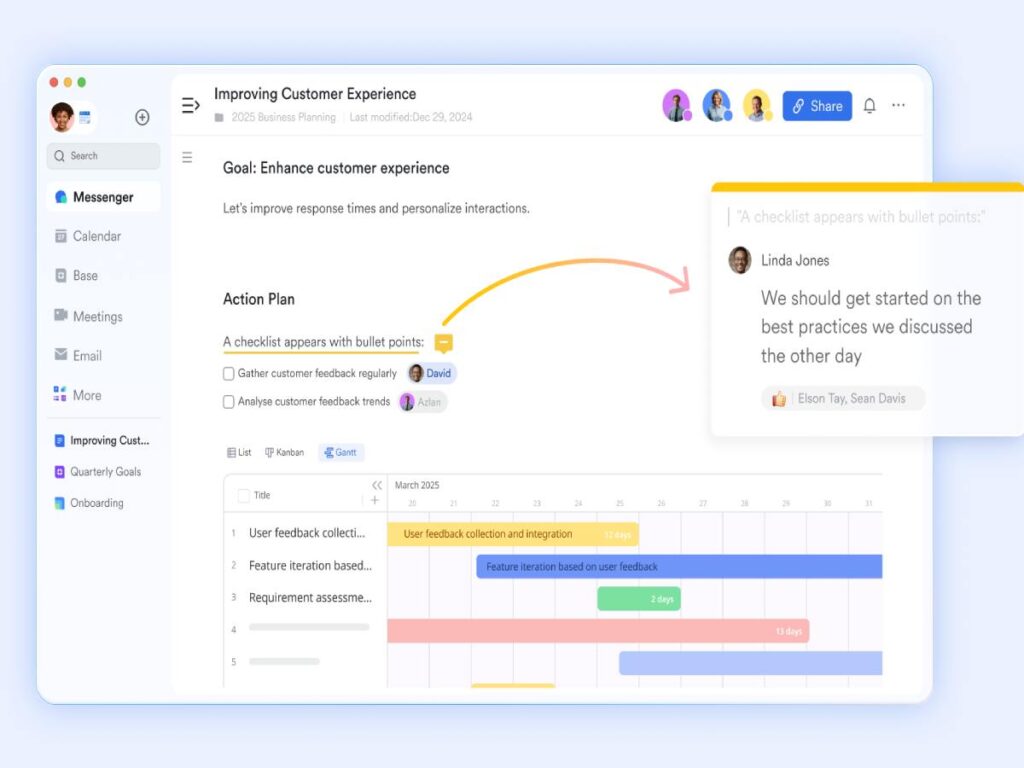
Cultural divergence in multi-location organizations often surfaces first in how different offices document and follow processes. The first office has evolved its processes organically and has an informal understanding of why they are the way they are. The second office receives the documented version of the processes without the evolutionary context, and adapts them based on what makes sense in its own context rather than what was intended in the original design.
-
Real-time co-editing for cross-location process documentation. When team members from both offices contribute to processing documentation simultaneously, the second office is not just receiving a document but participating in its creation, giving them the contextual understanding of why each element is the way it is rather than just the what.
-
“Version History” for transparent process evolution. When the second office encounters a situation where the documented process does not seem to fit their context and proposes an adaptation, the full history of the process and the reasoning behind its current form is accessible to everyone at both offices, enabling an informed conversation about adaptation rather than an uninformed local variation.
A shared goal framework that prevents strategic fragmentation with Lark Calendar
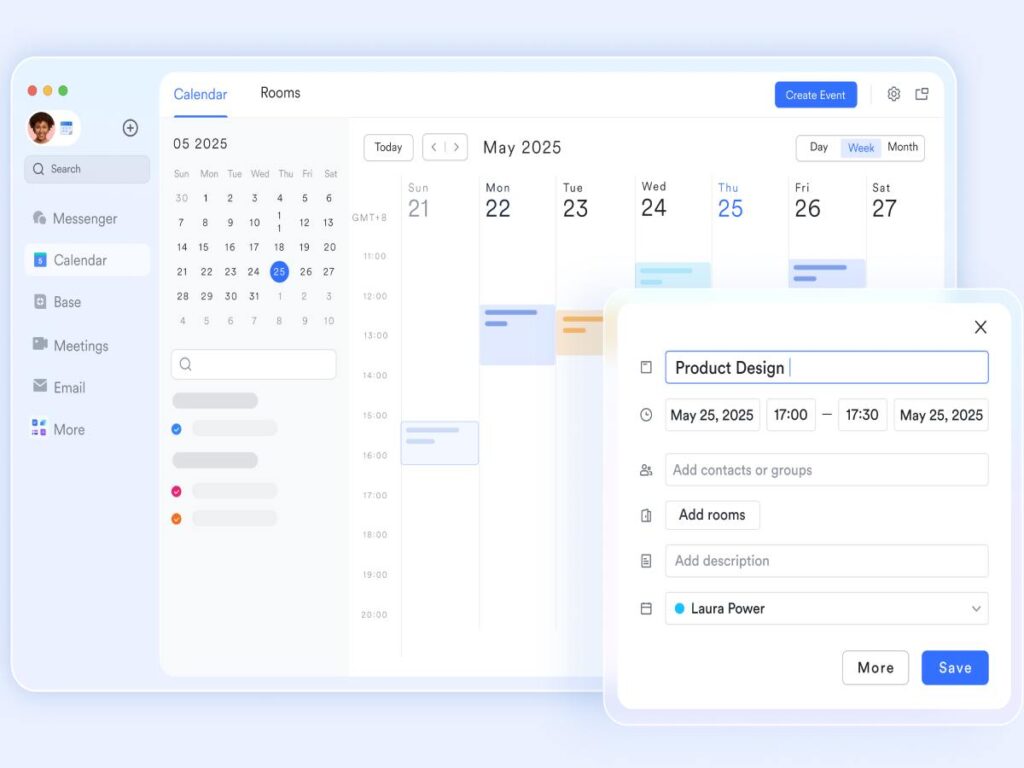
Multi-location organizations frequently develop a specific form of strategic fragmentation: both offices are working toward broadly compatible goals, but they are scheduling the work toward those goals in ways that create conflicts, missed dependencies, and duplicated efforts because neither office can see the other’s planning horizon clearly.
-
“Calendar Subscription” for cross-location schedule visibility. When both offices subscribe to shared project calendars and organizational milestone calendars, the scheduling decisions at each office are made with visibility into the other’s commitments rather than in isolation from them.
-
“Schedule in Chat” for cross-location coordination without scheduling overhead. When cross-location coordination requires aligning two offices’ schedules, the ability to compare live availability across both locations within a conversation thread removes the back-and-forth that makes cross-location scheduling feel costly and discourages the cross-location collaboration that culture continuity requires.
Bonus: Why culture decays in multi-location organizations
Culture decays across locations not because people in different offices are different kinds of people but because the mechanisms that sustain culture in a single office, shared physical context, ambient leadership visibility, and informal daily interaction, do not transfer to distributed environments without deliberate infrastructure investment.
Tools like Zoom and Microsoft Teams make cross-location communication possible. Notion and Confluence make cross-location documentation possible. But neither creates the communication norms that culture requires, and neither connects communication to documentation, scheduling for collaboration in a way that would allow cultural transmission to happen through the infrastructure rather than through deliberate ongoing effort. Teams evaluating Google Workspace pricing often add separate video conferencing and documentation tools to support distributed collaboration. While that setup helps teams communicate across locations, it does not always support the cultural alignment needed as organizations grow across offices and regions. Lark helps address both communication and organizational alignment within the same workspace.
Conclusion
The culture of the first office survives the opening of the second when the infrastructure that carries that culture is deliberately built rather than assumed to transfer automatically. A connected set of productivity tools that makes communication norms visible across locations, carries cultural documentation into the new office’s daily reference, enables genuine cross-location collaboration, keeps both offices working from the same process documentation, and aligns both offices’ planning horizons is how organizations maintain cultural coherence as they grow beyond the boundaries of a single shared space.
